A comprehensive review of the retail, office, industrial, mixed-use, and hospitality property markets across Botswana — covering Gaborone, Francistown, and secondary nodes.
01
Overview
Economic Context & Market Backdrop
Botswana Macroeconomic Overview
-0.9%
Full Year 2025 GDP (World Bank MPO April 2026)
10.3%
Headline Inflation (April 2026)
7.19%
Prime Lending Rate (2026)
5.5%
MoPR (raised April 2026)
13%+
LT Government Bond Yield (H1 2026)
32%
Public Debt % of GDP (Sep 2025)
Botswana's economy contracted in 2025, with the World Bank's Macro Poverty Outlook of April 2026 placing full-year GDP growth at -0.9%, a more pronounced contraction than the -0.4% previously estimated by the Ministry of Finance, and the first annual contraction in a decade. The decline reflects structurally weaker diamond revenues, fiscal tightening, and suppressed domestic demand, with the mining sector contracting 10.7% in the twelve months to September 2025. A more constructive signal comes from non-mining GDP, which grew 2.6% over the same period, reflecting underlying resilience in the broader economy. Q3 2025 returned a fractional +0.1%, the first positive quarter since Q1 2024, suggesting a tentative floor. For 2026, three institutional forecasters each project a return to positive growth: the World Bank at 2.7%, the Ministry of Finance at 3.1%, and the Bank of Botswana alongside the IMF at 2.3%. Our own assessment is materially more cautious, projecting a continued contraction in the range of -0.5% to -1.0% for 2026. We hold this as a minority view, and maintain it on the basis that continued structural weakness in diamond markets, constrained fiscal capacity, and insufficient non-mining substitution leave the near-term growth outlook more fragile than the institutional consensus implies. A credible recovery remains contingent on sustained diversification progress and stabilisation of the global diamond market.
Botswana GDP Growth · 2025 Actual & 2026 Institutional Forecasts
Sources: World Bank Macro Poverty Outlook, April 2026 (2025 actual; World Bank 2026 forecast); Ministry of Finance (2026 forecast); Bank of Botswana / IMF (2026 forecast); Maru Group assessment.
Against the backdrop of domestic fiscal pressure driven by diamond revenue weakness, nascent signals from the primary consumer market warrant attention. De Beers' inaugural Diamond Report, published in 2025, offers a more constructive read on end-consumer demand than Botswana's near-term revenue figures might suggest. Average consumer spending on natural diamonds in the United States rose 25% to $4,063 in 2025, with the mean stone size increasing to 1.86 carats from 1.65 carats in 2023, a meaningful indication that the quality premium attached to natural diamonds is not merely holding but actively expanding. Acquisition rates among affluent US households earning $150,000 or more rose from 12% in 2023 to 15% in 2025, and natural diamonds ranked as the leading luxury gifting choice among women surveyed, outperforming lab-grown alternatives, other precious stone jewellery, and designer goods. Millennials accounted for 32% of consumers and 55% of demand value, with Gen Z representing a further 18% of consumers and 23% of value, a generational demand profile that provides a credible medium-term floor for natural stone volumes. On the synthetic side, De Beers' data from 950 independent US retailers indicates a notable decline in lab-grown sales above 3 carats, suggesting that the commoditisation of larger synthetic stones is approaching a ceiling that constrains retailer upselling and compresses gross profits. If sustained, this dynamic may relieve some of the competitive pressure on natural diamond price positioning over time.
The significance of these findings for Botswana should not be overstated in the near term. The revenue contraction Botswana is experiencing reflects oversupply at the midstream level and constrained rough demand from cutting and polishing centres, dynamics that do not reverse overnight regardless of consumer sentiment in New York or London. But the underlying demand signal is directionally important: the consumer preference for natural diamonds over synthetics is proving more durable than many commentators anticipated, and the premiumisation trend, characterised by larger stones, higher average spend and growing affluent household penetration, speaks to structural demand tailwinds that will, in time, translate back into rough market recovery. For an economy as exposed as Botswana's to the diamond cycle, this is a more hopeful read than the current production and revenue figures alone would imply.
The Bank of Botswana maintained the Monetary Policy Rate at 1.9% through the first four MPC meetings of 2025, before raising it by 160 basis points to 3.5% in October, a move explicitly characterised by the BoB as a policy recalibration to restore monetary transmission, not a tightening signal. Commercial banks were simultaneously directed not to raise their prime lending rates. Despite this, the average PLR climbed from 6.01% at end-2024 to 7.19% by December 2025, driven by a structural liquidity squeeze in the banking system as lower diamond revenues compressed government spending into the financial sector, creating a widening disconnect between the policy rate and actual market lending conditions. Headline inflation averaged just 2.7% for the full year, remaining below the 3% lower bound of the BoB's 3–6% target range for most of 2025 before reverting to the objective range from September. In April 2026, the BoB raised the MoPR by a further 200 basis points to 5.5%, again framed as a recalibration to strengthen policy transmission, stabilise market liquidity, and support the exchange rate. Commercial banks have again been directed to hold Prime Lending Rates broadly stable at approximately 7.01%. In practice, however, banks are widening lending margins, tightening affordability criteria, and applying more conservative risk assessments, meaning that borrowing is becoming materially more difficult and less accessible even without a headline PLR increase. Annual loan growth has slowed to approximately 2.6%, down from over 5% in 2025, while household credit growth has effectively stalled. Long-term government bond yields now exceed 13%, acting as an effective benchmark across the broader financial system and raising the cost of capital for developers and investors while reducing risk appetite in the unlisted property space.
Government fiscal stress is a material property market risk. Estimated government arrears to road contractors of approximately P15bn are creating balance sheet stress across the construction sector, a direct risk for development procurement and payment timelines. The 2025/26 budget deficit has been revised upward by 15.2% to P25.5 billion, which Ministry of Finance data places at 9.3% of GDP, against a World Bank Macro Poverty Outlook figure of 6.5% of GDP for the same period. The divergence reflects differing GDP base estimates and definitional conventions; both figures confirm a deficit of significant scale driven primarily by a 23.4% decline in mineral revenues to P12 billion, a stark illustration of the structural fragility of Botswana's fiscal base. Total government debt, including sovereign guarantees, stood at an estimated P90 billion (33% of GDP) as of December 2025, with domestic debt at P56 billion (20.5% of GDP), already in breach of the domestic statutory ceiling of 20%. The debt trajectory is concerning: total debt is projected to reach 38.8% of GDP by end of 2025/26 and potentially 44.7% by end of 2026/27, the latter breaching the overall statutory debt limit of 40%. The World Bank projects public debt reaching 39.5% of GDP by March 2026, rising to 44.3% by end of 2026 and 47.0% by 2027, figures broadly consistent with domestic projections though modestly higher at each interval, pointing toward a debt trajectory that will test the statutory framework before the end of the decade. Government has signalled a willingness to address this constraint through a structural adjustment of the framework itself, with discussions around raising the statutory debt ceiling to as high as 60%, a move that would provide immediate fiscal breathing room but which, if confirmed, would represent a meaningful shift in the parameters of Botswana's fiscal discipline and a signal of the depth of the adjustment underway. Botswana retains investment-grade sovereign ratings from Moody's (Baa1 Negative) and S&P (BBB Negative), though both carry negative outlooks reflecting the deteriorating fiscal position and ongoing diamond sector uncertainty.
MONETARY & FISCAL CONTEXTBotswana · H1 2026
Prime Lending Rate7.19%Bank of Botswana. Weighted cost of institutional debt capital for real estate transactions.
Long-Term Gov. Bond Yield>13%The risk-free benchmark above which income-producing property must compete. Development hurdle rate approximately 9%.
FX Reserves · Dec 2025P47.4bnEquivalent to approximately 6 months import cover. Bank of Botswana.
2025/26 Budget DeficitP25.5bnDriven by a 23.4% decline in mineral revenues. Equivalent to approximately 9.3% of GDP (MoF estimate).Fiscal Stress
Public Debt · Dec 202533%As % of GDP incl. sovereign guarantees. Projected 39.5% by March 2026. Statutory ceiling 40%.40% Ceiling
Sovereign Credit RatingsBaa1 / BBBMoody's Baa1 · S&P BBB. Investment grade retained.Both Negative Outlook
Sources: Bank of Botswana; Ministry of Finance; World Bank Macro Poverty Outlook April 2026; Moody's; S&P Global Ratings.
A further dimension to Botswana's macroeconomic vulnerability is the steady depletion of foreign exchange reserves. Reserves have declined from P84.9 billion (18.3 months of import cover) in 2015 to an estimated P47.4 billion (6 months of import cover) in December 2025, a level the Bank of Botswana has explicitly characterised as a key vulnerability for the sustainability of the country's exchange rate framework. Six months of import cover represents the lower end of the internationally accepted adequacy threshold, leaving limited buffer against external shocks. Against this backdrop, the Pula's nominal effective exchange rate (NEER) depreciated 2.1% in 2025, with the real effective exchange rate declining 1.1%. The Pula currency basket was rebalanced to equal weights of 50% ZAR and 50% SDR in January 2025, and the annual downward rate of crawl was increased to 2.76% from July 2025, a setting maintained for 2026. Pula weakness has continued into H1 2026, with the exchange rate moving from approximately P13.07 to the US dollar in late 2025 to around P13.42 by end of Q1 2026, with further softness observed on spot markets. While the Pula has firmed modestly against the rand, offering some relief on South African import costs, the majority of Botswana's key commodity imports including fuel are priced in US dollars, meaning Pula weakness directly amplifies the domestic impact of already-elevated international prices. For commercial property, the depreciation trajectory has tangible consequences: imported construction cost inflation, increased cost of foreign-currency-denominated development finance, and upward pressure on the landed cost of building materials, all of which compound the already-challenging development economics in the current environment.
Global Pressures and Domestic Transmission
The Botswana economy enters the second half of 2026 navigating a confluence of external shocks and domestic financial tightening that is quietly but meaningfully reshaping the operating environment for businesses, households, and property markets alike. Globally, the outbreak of war in the Middle East in early 2026 derailed what had been a broadly positive economic trajectory. The IMF, which had been preparing to upgrade its global growth forecast to 3.4% for the year, revised this down to 3.1% in its April 2026 World Economic Outlook. Global headline inflation, which had been on a sustained downward path, is now projected to rise to 4.4% in 2026, driven primarily by energy price disruptions. Downside risks dominate the outlook, with an adverse scenario placing global growth as low as 2.5% and a severe disruption scenario approaching historically recessionary conditions at 2.0%.
The oil price trajectory has been the primary shock vector. Brent crude opened 2026 at approximately US$61 per barrel before surging to a peak of US$138 per barrel on 7 April, the highest monthly average since Russia's invasion of Ukraine in 2022, following the de facto closure of the Strait of Hormuz, a key route for approximately one-fifth of global oil and LNG supplies. By early June 2026, Brent had partially retreated to around US$97 per barrel, still some 48% above year-ago levels. The EIA's base case projects Brent averaging approximately US$106 per barrel through Q2 2026, easing to US$89 per barrel by Q4 as Middle Eastern production gradually normalises. The UAE's departure from OPEC effective 1 May 2026 has added further uncertainty, reducing the bloc's effective spare capacity from a prior forecast of 3.8 million barrels per day to approximately 2.5 million barrels per day through 2027. The Russia-Ukraine conflict remains a compounding structural factor: surging oil prices driven by the Middle East shock have materially boosted Russian export revenues, increasing Moscow's capacity to sustain the conflict, while continued constraints on Ukrainian grain and maize export capacity are contributing to food price pressures across import-dependent sub-Saharan economies, including Botswana.
For Botswana, as a small, open, fuel-importing economy with no domestic refining capacity, the transmission of these global shocks has been direct and rapid. Botswana imports 100% of its refined petroleum products, meaning every material movement in global crude benchmarks flows through into domestic pump prices, transport costs, and the broader cost of living. This full import dependency is a systemic feature of Botswana's economic architecture, not an isolated event, and market participants should understand it as a recurring structural risk. In late March 2026, BERA responded to the international price surge with one of the most significant fuel price adjustments in recent memory, raising petrol 95 by P5.05 per litre, diesel by P8.77 per litre, and illuminating paraffin by P10.55 per litre. International diesel prices had risen 90.8% and illuminating paraffin 110.9% between February and March 2026 alone. Even following these adjustments, under-recoveries persisted at P1.41 per litre for diesel at end of March, suggesting that pricing pressure had not been fully resolved at the time of writing. It is worth noting in this context that Botswana has been in exploratory discussions to acquire a 30% equity stake in the US$6.6 billion Lobito oil refinery currently under construction in Angola, a development that, if concluded, would deliver approximately 60,000 barrels per day of dedicated refining capacity and materially reduce the country's long-term exposure to global crude price volatility. However, the project remains at a genuinely preliminary stage: Angola's state oil company Sonangol is still navigating a substantial funding gap of approximately US$4.8 billion, and the discussions around Botswana's potential participation contain conflicting signals that make a near-term conclusion far from certain. The events of H1 2026 have illustrated with considerable force precisely why this kind of strategic investment matters; whether the project reaches financial close on a timeline that meaningfully addresses Botswana's medium-term energy security needs remains an open question.
The inflation impact has been swift and severe. Annual CPI, which stood at a well-contained 3.9% at end-2025 and 4.1% in January 2026, surged to 10.3% in April, the highest reading since December 2022, with transport costs rising 28.5% year on year. On a month-on-month basis, consumer prices rose 6.7% in April, the sharpest single-month increase on record. Transport is particularly significant in Botswana's CPI composition, accounting for approximately 23% of the consumer price index, meaning fuel cost increases cascade rapidly and broadly across commuting costs, food distribution, logistics, and the cost of basic goods. This is not demand-driven inflation. It is imported and cost-push in nature, originating from higher fuel costs, exchange rate effects, and global commodity pressures, and it is structurally harder to address through conventional monetary policy alone. Its effects are most acutely felt by lower- and middle-income households with limited financial buffers, precisely the consumer base that underpins Botswana's formal retail sector.
For the commercial property market, the implications are direct and multi-layered. Retail foot traffic, particularly at centres outside the Gaborone CBD that serve commuter-dependent catchments, faces meaningful headwinds as transport cost inflation compresses real disposable income. Diesel-dependent occupiers including logistics operators, food distributors, and construction contractors are absorbing significant margin pressure with foreseeable consequences for rental affordability and lease renewal negotiations. Development pipelines face a higher real cost of finance even where nominal lending rates appear stable, as banks tighten credit conditions and widen margins. We do not expect these pressures to resolve rapidly. Even on the IMF's base case, which assumes the Middle East conflict remains limited in scope and duration, a full normalisation of oil production and trade patterns is not projected until late 2026 at the earliest.
Notwithstanding the near-term headwinds, structural tailwinds remain compelling. Urban population has reached 70.9% and continues to rise. The Khoemacau copper expansion and NexMetals Selebi-Phikwe project are creating industrial and residential demand across the Kalahari Copper Belt. The Kazungula Bridge is operational, the Trans-Kalahari Railway study is advancing, and nascent energy infrastructure investment signals Botswana's longer-term ambitions, all of which represent medium-term demand drivers for quality commercial property.
Looking beyond the current diamond cycle, Botswana's resource base is diversifying in ways that are structurally significant for long-term commercial property demand. The Kalahari Copper Belt, anchored by the Khoemacau expansion and the prospective NexMetals Selebi-Phikwe project, represents a multi-decade industrial and logistics demand driver that extends well beyond Gaborone's primary catchment. The country's rare earth mineral endowment, still in early-stage exploration, adds a further dimension to the diversification story. On the energy front, the recently announced 500MW solar plant in Maun, a partnership between the Government of Botswana and NAQAA Energy LLC of Oman, marks a significant step in Botswana's transition away from coal dependency and signals the country's ambition to position itself as a regional clean energy hub. Taken together, these structural shifts across copper, rare earths, and solar represent a meaningful broadening of Botswana's economic base that will generate real commercial property demand over the medium to long term, independent of diamond sector performance.
Key Headwinds
Key Tailwinds
LT bond yields above 13%; MoPR raised to 5.5% April 2026; feasibility hurdle now meaningfully above 9% stabilised yield
Unemployment at 27.6% overall; Youth 38.2% (Statistics Botswana 2025)
Institutional capital active: BPOPF in secondary markets; pension funds entering tourism
Market Size and Structural Dynamics
The commercial property market in Botswana is meaningful in aggregate but incompletely quantified at the market-wide level, in the absence of a comprehensive registry of investment-grade stock. The listed sector and the formal retail footprint provide the clearest anchors; beyond those, the data thins.
The formal retail sector accounts for approximately 900,000 square metres of gross lettable area nationwide, of which approximately 400,000 square metres is concentrated in the Gaborone metropolitan area. The BSE-listed property sector, comprising six counters with a combined market capitalisation of approximately P8.2 billion as at May 2026 and a combined portfolio value across the five domestically-focused entities of approximately P10 billion on FY2025 published data, provides the most transparent cross-section of institutional commercial property ownership in the country. The unlisted property market, which encompasses a substantially larger pool of income-producing assets held by institutional, corporate, and private investors outside the BSE framework, is not comprehensively quantifiable from publicly available data. Its scale materially exceeds the listed component, but the absence of a centralised transaction or ownership registry means any aggregate figure is an estimate rather than a measured outcome.
The more consequential dimension of the market's structure is not its current scale but the capital positioned to enter it. Botswana's pension fund sector, with total assets under management of over P115 billion as at the World Bank's 2023 Financial Sector Assessment Programme, is one of the largest in sub-Saharan Africa relative to GDP. The Botswana Public Officers Pension Fund alone holds approximately three-quarters of total pension sector assets, making it by some margin the dominant force in the country's institutional investment landscape. The pension sector's current allocation to direct property stands at approximately 3 percent of total assets under management, a fraction of the 25 percent ceiling the Retirement Funds Act 2022 permits.
The driver compelling a reallocation of this capital is legislative rather than cyclical, and its implications for the domestic property market are therefore not contingent on the interest rate environment or the economic cycle. The Retirement Funds Act 2022 requires pension funds to increase their minimum domestic investment allocation from the prior requirement of 30 percent to a new floor of 50 percent over an unspecified transitional period. The World Bank's FSAP Technical Note estimated that this requirement implies the repatriation of approximately P18 billion in offshore-invested pension assets into the domestic market, a figure that is more than twice the combined market capitalisation of all six BSE-listed property counters as at May 2026 and approaching double the combined portfolio value of the five domestically-focused listed entities on FY2025 data.
Botswana Pension Sector · Structural Capital Dynamics
Total Pension Sector AUM
P115bn+
BPOPF holds ~75% of total sector assets
World Bank FSAP 2023
Current vs Permitted Property Allocation
3% → 25%
Current allocation vs RFA 2022 permitted ceiling
22pt gap
Estimated Offshore Repatriation Mandate
±P18bn
30% → 50% domestic investment floor (RFA 2022)
World Bank est.
P115bn+
Pension Sector AUM
100%
Baseline
±P18bn
Repatriation Mandate
15.7% of AUM
P8.2bn
BSE Listed Property
7.1% of AUM
The estimated repatriation mandate exceeds the entire BSE-listed property sector market capitalisation by more than two times — the listed market cannot absorb this capital alone.
2.2×
Mandate vs BSE listed property sector
Sources: World Bank Financial Sector Assessment Programme Technical Note, 2023; Retirement Funds Act 2022 (Botswana); BSE / Imara Capital Securities, May 2026. Repatriation estimate is World Bank FSAP figure. AUM includes all pension funds registered under Botswana's Retirement Funds Act.
The World Bank assessment was candid about the risk this creates alongside the demand it generates. A domestic market of Botswana's current depth absorbing P18 billion in repatriated institutional capital carries genuine concentration and systemic risk where that capital competes for the same narrow pool of investment-grade assets rather than catalysing new product. The BSE-listed market at approximately P8.2 billion in capitalisation cannot absorb that demand alone; direct acquisition, co-investment structures, and development financing are all necessary channels. The depth of the domestic investable universe is the binding constraint, not the availability of capital.
The dynamic is already visible in the transaction record. The BPOPF's acquisition of Diphalane Mall in Palapye in 2025 and its proposed direct acquisition of four Gaborone properties from PrimeTime Property Holdings, announced April 2026 and not yet unconditional reflect a deliberate strategy to build domestic direct property exposure in line with the repatriation mandate. The pension fund's concurrent presence as a shareholder across every listed property counter and as a direct acquirer in the unlisted market reflects the range of channels through which that exposure is being built. For developers and investors who can create institutional-grade product in the current environment, the structural demand signal is not contingent on the diamond cycle, the oil price, or short-term consumer confidence. It is legislative, and it will persist.
02
Capital Markets
The Investment & Transactional Market
The Investment and Transactional Market
Botswana's listed property sector entered 2025 and H1 2026 navigating a bifurcated transactional landscape. Institutional capital has remained active and, in select cases, meaningfully acquisitive, while the unlisted and development funding market has tightened materially against the backdrop of elevated long-term bond yields, widening bank lending margins, and a general repricing of risk that has raised the effective hurdle rate for new investment.
The BSE-listed property sector comprises six counters: Letlole La Rona, New African Properties, PrimeTime Property Holdings, RDC Properties, FaR Property Company, and Turnstar Holdings. As at May 2026, the combined market capitalisation of the six entities stood at approximately P8.2 billion. The combined portfolio value of the five domestically-focused entities was approximately P10.1 billion on FY2025 published data, a figure that has since been subject to downward fair value adjustment as higher discount and capitalisation rates work through the sector, with updated valuations for individual entities addressed below. All six are structured as variable rate loan stock companies, a vehicle that performs a broadly analogous economic function to a real estate investment trust, providing listed, income-distributing exposure to diversified property portfolios, though without the formalised tax and regulatory framework that formal REIT designation provides in other jurisdictions. The absence of that framework is a structural feature of the market worth monitoring: formalising the VRL structure into a recognised REIT regime would strengthen the sector's appeal to foreign institutional capital operating under mandates that specify REIT-eligible instruments, and would unlock tax efficiencies that the current structure does not provide. Whether that conversation advances in the context of the Retirement Funds Act repatriation imperative remains to be seen.
The sector is bifurcating clearly along management model lines. The two internally managed counters, Turnstar Holdings and Letlole La Rona, are the sector's most closely watched. Turnstar, with a loan-to-value ratio of 21 percent and a five-year operating track record that is unambiguously positive, reported rental income of P354.4 million for FY2026 (the year ended 31 January 2026), a 2.90 percent increase on the prior year, and operating profit of P193.9 million, up 2.05 percent. These results affirm the operational resilience the fund has consistently demonstrated across the cycle. Profit before tax, however, declined sharply to P64.4 million from P188.6 million in FY2025, a movement attributable entirely to a P80.0 million fair value loss on investment properties, which reflects higher discount and capitalisation rates being applied to Botswana-based assets rather than any deterioration in the underlying income base. The fund's income-generating capacity is intact. Investment properties were accordingly revalued to P2.6 billion, a reduction of 8.36 percent on the prior year. The final distribution was maintained at 20 thebe per linked unit for the fourth consecutive year, a signal of capital discipline rather than financial stress at a loan-to-value ratio that retains material debt capacity against the company's internal 30 percent ceiling. Mlimani City has retained its position as Turnstar's largest single revenue contributor, affirming the strategic logic of the cross-border expansion into Tanzania. Game City's valuation of P1.110 billion on 65,293 square metres of gross lettable area implies a stabilised capitalisation rate of 7.75 to 8 percent, establishing the most reliable transactional benchmark currently available for dominant large-format Gaborone retail. Turnstar's conditional acquisition of two commercial properties from GH Group Proprietary Limited for P123 million, to be funded through commercial bank debt and subject to Competition and Consumer Authority approval and independent shareholder approval, remains in progress. If concluded, the transaction would lift the portfolio to approximately P2.7 billion in value and approximately 105,000 square metres of gross lettable area. The acquisition is classified as a related-party transaction under the BSE's Equity Listings Requirements and is the most significant disclosed property transaction of the period under review.
BSE Listed Property Sector · Key Metrics · May 2026
Letlole La RonaLocal Expansion Strategy
P854m
Market Capitalisation · May 2026
P1.83bn
Portfolio Value
38%
LTV
4.40t ¹
Last Distribution
New African PropertiesZero Gearing
P2,448m
Market Capitalisation · May 2026
P1.53bn
Portfolio Value
0%
LTV
17.23t ¹
Last Distribution
PrimeTime Property HoldingsDeleveraging
P436m
Market Capitalisation · May 2026
P1.70bn
Portfolio Value
45%
LTV
Nil ¹
Last Distribution
RDC PropertiesW. Cape & Hospitality Strategy
P2,417m
Market Capitalisation · May 2026
P5.97bn ²
Portfolio Value
37.7%
LTV
9.20t ³
Last Distribution
FaR Property CompanySADC Expansion Strategy
P897m
Market Capitalisation · May 2026
P1.76bn
Portfolio Value
25%
LTV
12.65t ⁴
Last Distribution
Turnstar HoldingsEast Africa Expansion
P1,179m
Market Capitalisation · May 2026
P2.60bn
Portfolio Value
21%
LTV
20.00t ⁵
Last Distribution
Sector Combined Market Capitalisation
Imara Capital Securities · 29 May 2026
P8.23 Billion
Market capitalisation: Imara Capital Securities, 29 May 2026. Portfolio values and LTV reflect most recently published results; financial year-ends vary by counter. ¹ H1 FY2026 interim distribution; full-year comparability varies. ² Includes assets across seven countries. ³ FY2025 full-year distribution; note bonus share issuance July 2025. ⁴ FY2025 final distribution only; nil declared H1 FY2026. ⁵ FY2026 full-year distribution; fourth consecutive year at 20 thebe.
Letlole La Rona reported full-year FY2025 revenue of P201.8 million, representing 16 percent growth, with profit before tax of P131.3 million and a loan-to-value ratio of 38 percent. Portfolio occupancy stands at 98 percent with collection rates at 100 percent, and the fund's average total yield of 9.5 percent across its 23 direct properties and 207,126 square metres of gross lettable area makes it one of the most operationally efficient vehicles in the sector. For the half-year ended 31 December 2025, revenue grew 6.72 percent to P106.9 million while operating expenses escalated 18.12 percent to P41.5 million, reflecting cost pressures that have intensified across the portfolio. A fair value adjustment on investment properties of P35.3 million, combined with net finance costs of P28.9 million and the higher operating cost base, reduced profit before tax to P40.6 million from P82.6 million in the comparable prior period. This decline reflects fair value movement and operating cost escalation rather than any deterioration in underlying income generation. Investment properties were marked to P1.83 billion, modestly lower than the P1.94 billion recorded at full-year FY2025. The interim distribution of 4.40 thebe per linked unit, comprising 0.05 thebe dividend and 4.35 thebe debenture interest, remains consistent with the fund's payout posture. The second-half FY2025 distribution was 22 percent above the comparable prior-year period, a signal of the recovery trajectory that the H1 FY2026 headline figures, weighted by fair value movement and cost pressures, partially obscure. The board has resolved to exit its Kenyan associate investments, a meaningful strategic pivot away from the cross-border regional expansion model that characterised the sector's ambitions over the prior decade, and a candid acknowledgement that the domestic opportunity remains more compelling than offshore diversification at current execution risk levels. Active development pipeline activity includes the co-development of a retail mall in Selebi-Phikwe through the JTTM subsidiary, with construction imminent.
New African Properties reported revenue of P253.9 million for FY2025, a 4.4 percent increase, with distributable income of P201.5 million and a distribution of 33.32 thebe. The fund's defining characteristic is its zero-gearing balance sheet, unique among listed property vehicles in Botswana, which underpins a stable distribution stream that the market has consistently priced at a meaningful premium to net asset value. For the half-year ended 31 January 2026, revenue increased 6.39 percent to P134.0 million, with investment properties edging down 1.26 percent to P1.53 billion following fair value losses of P20.1 million recorded in the period. Property costs rose 20.56 percent to P25.5 million and profit before tax decreased 8.36 percent to P79.8 million notwithstanding the revenue growth. The distribution was 17.23 thebe per linked unit. The most material near-term risk in the listed sector sits within the NAP portfolio. The Riverwalk Shopping Centre anchor lease expiry in May 2026 represents a single significant earnings event that will test the fund's ability to maintain its distribution trajectory through FY2026. The H1 FY2026 fair value losses of P20.1 million confirm that this risk is live and already reflected in the portfolio valuation rather than a prospective contingency. With 21 percent of gross lettable area facing lease expiry across the portfolio during the year, and management bandwidth heavily committed to the Riverwalk renewal, the outcome of that negotiation is the most consequential single leasing event currently active in the Gaborone retail market. NAP's zero-gearing balance sheet, 100 percent collection rate, and consistent premium-to-NAV market pricing make it the sector's most defensively positioned vehicle from a balance sheet perspective. Its concentration in prime retail, however, means its passing rent base was established in a market environment considerably more supportive than the current one, and the rotation of leases to expiry is bringing those rents into contact with a leasing market where even national retailers in dominant centres are pushing back on renewal terms. A rental rebase across the portfolio is, in this context, a live dynamic rather than a contingency. The fund's zero gearing provides the financial depth to absorb this transition without distributional stress of the kind that a leveraged peer would face, but it is a dynamic that active portfolio management will need to navigate carefully over the medium term.
RDC Properties, the largest listed property portfolio on the BSE by total asset value, reported full-year FY2025 results in March 2026 that demonstrated the resilience of its geographically diversified model. Total revenue increased 5 percent to P600.9 million, net property income rose 8 percent to P386.9 million, and profit before tax increased significantly to P263.4 million. Profit for the year rose 53 percent to P236.8 million, with total distributions to shareholders increasing 42 percent to P87 million. The loan-to-value ratio reduced to 37.68 percent and net asset value increased 8 percent to P3.17 per linked unit. Portfolio vacancy by year-end stood at 5.3 percent, down from 7 percent in the prior year, supported by sustained leasing activity including new occupancy at the Western Cape and KwaZulu-Natal portfolios and a new government tenancy at Standard House in Gaborone. The overall portfolio value remained stable at approximately P5.97 billion following the disposal of non-core assets totalling P216 million at an average 8 percent premium to book value. A bonus share issue at a ratio of one unit for every four held, resulting in the issuance of 189,557,985 new units listed on the BSE in July 2025, enhanced market liquidity and returned value to unitholders. Subsequent to its FY2025 year-end, RDC concluded the acquisition of a 30 percent equity stake in the Bergkelder Precinct development company in Stellenbosch, South Africa, together with project funding and a working capital facility, further extending its South African commercial footprint and reinforcing the international mandate profile that distinguishes the fund from the domestically-focused counters. RDC's 64-property portfolio spanning seven countries means its Botswana commercial footprint, while meaningful, represents a component of a materially broader international investment mandate, a distinction relevant when assessing its role as a domestic market participant versus a BSE-listed vehicle with significant offshore exposure.
FaR Property Company, the sector's only counter with majority industrial exposure at 53 percent of portfolio by gross lettable area, reported revenue of P96.95 million for the half-year to December 2025, an 11 percent increase, with operating profit of P89.03 million and profit of P63.85 million. The fund retains a loan-to-value ratio of 25 percent, providing approximately P300 million of additional debt headroom, and is in an active capital deployment phase with seven new projects targeted for completion before June 2026 and a further four in FY2027. No distribution was declared for the half-year period, with cash retained for pipeline execution. FPC's achieved rental yield of 12 percent on developed properties is the highest in the listed sector and the most useful current benchmark for industrial development feasibility assessment: it reflects both the quality of the fund's tenant covenant base, with 78 percent Grade A national and international occupiers, and the structural premium attached to well-specified industrial product in a market where prime vacancy is effectively negligible.
PrimeTime Property Holdings reported a 67.28 percent year-on-year increase in earnings to P31.0 million for the half-year ended 28 February 2026, with profit before tax surging 60 percent to P36.3 million. Revenue grew 3.93 percent to P122.1 million and operating profit before fair value adjustment rose 6.86 percent to P62.2 million. These figures, while materially improved on the prior period, require careful contextualisation. The earnings recovery is driven primarily by disposal gains rather than by rental income growth or operational improvement. Investment properties declined 7.34 percent to P1.7 billion, net finance costs rose 8.79 percent to P38.6 million, and no interim distribution was declared for the period. The fund's loan-to-value ratio stands at 45 percent with an interest cover ratio that has required lender condonements during the prior financial year, reflecting the continued financial stress that the headline earnings figure does not adequately convey. PrimeTime has been executing a sustained multi-tranche deleveraging programme across the period. The first tranche, announced in February 2026, involved the disposal of two investment properties under a capital recycling and debt reduction mandate. The second tranche, announced in April 2026, covers four Gaborone investment properties to be sold to the Botswana Public Officers Pension Fund acting through asset manager Seventy5 Degrees for P98.5 million in cash, subject to the transaction becoming unconditional, with approximately P62 million of proceeds earmarked for the repayment of secured debt linked to the properties and the remainder directed toward further deleveraging and near-term capital expenditure. The second tranche is classified as a related-party transaction under the BSE's Listings Requirements. Taken together, these two tranches represent a programme of deliberate balance sheet repair rather than a single portfolio event, and their combined effect on gearing will be visible in PrimeTime's year-end balance sheet. The BPOPF's participation in the second tranche simultaneously illustrates its continued appetite for direct property acquisition even while navigating complex investment relationships across the listed sector.
The institutional capital picture that emerges from this analysis is one of structural concentration rather than broad-based market depth. The Botswana Public Officers Pension Fund holds meaningful stakes across every listed property counter on the BSE, making it the single most consequential force in the sector's capital allocation dynamics. Its investment decisions, whether as a shareholder, a direct property acquirer, or a co-investor in unlisted structures, carry implications for every listed vehicle simultaneously. This concentration reflects the structural reality of a small, institutional-investor-dominated market, but it is not without risk: the World Bank's 2023 Financial Sector Assessment Programme explicitly cautioned that the repatriation of offshore pension assets into a domestic market of limited depth could increase concentration and amplify systemic risk if not accompanied by a deliberate expansion of the investable opportunity set. The Retirement Funds Act amendments of 2022, which require pension funds to increase their minimum domestic investment allocation from 30 percent to 50 percent over an unspecified transitional period and which are estimated to necessitate the repatriation of approximately P18 billion in offshore-invested assets, will intensify this dynamic materially. Against a backdrop where pension fund property allocations stood at approximately 3 percent of total assets as at the most recent World Bank assessment, against a permitted ceiling of 25 percent, the structural incentive to deploy into quality domestic property is not cyclical in origin. It is legislative, and it will persist regardless of the near-term interest rate environment.
The practical consequence for the listed property sector and the broader investment market is intensifying competition for quality income-producing assets, continued downward pressure on prime capitalisation rates in the medium term, and a structural incentive for the creation of new investable product, whether through development, restructuring of unlisted holdings, or deepening of the BSE-listed property sector itself. Developers and investors who can demonstrate a credible stabilised yield above the current feasibility threshold, now meaningfully above 9 percent given long-term government bond yields in excess of 13 percent and a prime lending rate of 7.19 percent, will find institutional capital willing to transact. Those who cannot will find the market's patience exhausted.
Development finance conditions have tightened measurably across the unlisted market. The practical consequence is a shrinking pipeline in all but the most compelling locations, which is, paradoxically, a constructive signal for income-producing assets in prime nodes where supply constraint is an underappreciated component of value. Developers who secured funding and locked in construction costs ahead of the current liquidity squeeze are navigating the current environment from a position of relative strength. Those seeking to initiate new projects face a materially more difficult cost of capital calculus, and the discipline that the market is currently imposing on speculative supply is, from a structural perspective, precisely what prime asset values require.
BSE LISTED PROPERTY SECTOR
Key Transactions & Corporate Events
2025 – H1 2026
ACQUISITION
CORPORATE
DISPOSAL
PENDING
2025
ACQUISITION
BPOPF — Diphalane Mall, Palapye
BPOPF acquires Diphalane Mall (±14,000m²) via Khumo Asset Management. First material pension fund direct property acquisition in a secondary node; full transaction metrics to be confirmed.
July 2025
CORPORATE
RDC Properties — Bonus Share Issuance & FY2025 Distribution
189.6 million new units issued at 1:4 ratio, enhancing market liquidity. FY2025 distribution of 9.20 thebe per linked unit — a 42% increase on the prior year.
Acquisition of 30% equity stake in Bergkelder Precinct development company, South Africa, with project funding and working capital facility. Extends South African commercial footprint post FY2025 year-end.
H1 FY2026
STRATEGIC
Letlole La Rona — Kenyan Exit & JTTM Pipeline
Board resolves to exit Kenyan associate investments; capital redeployed toward domestic pipeline. Co-development of Selebi-Phikwe retail mall via JTTM subsidiary, with construction imminent.
February 2026
DISPOSAL
PrimeTime — Deleveraging Programme, First Tranche
Disposal of two Gaborone investment properties under a capital recycling and debt reduction mandate. First tranche of a multi-tranche programme; proceeds directed to debt repayment.
April 2026 (Proposed)
PROPOSED · NOT YET UNCONDITIONAL
PrimeTime / BPOPF — Second Disposal Tranche, P98.5m
Four Gaborone properties proposed to be sold to BPOPF via Seventy5 Degrees for P98.5 million. Related-party transaction; not unconditional at date of report. Approximately P62 million earmarked for secured debt repayment.
Pending CCA Approval
PENDING REGULATORY APPROVAL
Turnstar Holdings — GH Group Acquisition, P123m
Conditional acquisition of two commercial properties from GH Group Proprietary Limited for P123 million. Subject to Competition and Consumer Authority approval and independent shareholder approval. Related-party transaction under BSE Equity Listings Requirements.
Sources: Company announcements and published financial results. Proposed transactions are subject to conditions precedent and may not proceed. Timeline is not exhaustive of all disclosed corporate activity.
The transactional market carries one structural risk dimension that the sector has been slower to acknowledge than the data warrants. The 2025 National Money Laundering and Terrorist Financing Risk Assessment, a national government document coordinated by the AML/CFT/CPF National Coordination Office at the Ministry of Finance, identified Botswana's real estate sector as the highest money laundering risk category across all financial sectors assessed, citing over 34 reported cases between 2020 and 2024 with estimated flows exceeding P1.1 billion. The primary mechanisms identified were high-value, often cash-based transactions and the registration of properties under companies and trusts to obscure beneficial ownership. Regulatory scrutiny of real estate transactions, beneficial ownership disclosure requirements, and compliance obligations will intensify as a consequence. For institutional participants, this is a compliance and reputational consideration that is becoming harder to treat as peripheral.
03
Asset Class
The Botswana Retail Market
Retail Market Overview
Rental Snapshot · Retail · Gaborone
Category
Rental Range (per m²/month)
Forecast
Super-Prime Anchor
P130 – P140
→
Prime Anchor
P115 – P125
→
Secondary Anchor
P70 – P90
↓
Prime Line Store
P180 – P300+
↓
Secondary Line Shop
P70 – P135
↓
Source: Maru Group Internal Data
Capitalisation Rate Snapshot · Retail · Gaborone
Asset Grade
Cap Rate
Forecast
Super-Prime
7.5 – 8%
→
Prime
8.5 – 9%
↘
Secondary
10%+
↓
Source: Maru Group Internal Data
The Gaborone retail market remains the most mature in Botswana, with an estimated ±400,000m² of formal retail space across the city and its immediate environs. The market continues to cater to a diverse spectrum of offerings, from super-prime regional centres in excess of 50,000m² to neighbourhood convenience strips. Despite the pressures of a competitive trading environment, super-prime and prime centres have demonstrated commendable resilience, with quality stock remaining in short supply relative to institutional demand.
Airport Junction remains Botswana's premier retail destination, continuing to command above-market line store rentals for select premium tenants. Game City, the largest centre by GLA at ±59,000m², has reported improved overall performance following resolution of historical access constraints. It is noted, however, that the centre continues to experience divergent trading conditions across its internal nodes. The lifestyle and gaming arcade component and the upper level retail node, which accommodates Top Play as a principal tenant, continue to experience elevated vacancies and tenant churn above the market average, a leasing challenge that has persisted through the period under review. Prospective investors and tenants should assess the performance differential between the centre’s stronger and more challenged nodes with care. Riverwalk Shopping Centre maintains strong trading fundamentals, anchored by a compelling food and lifestyle offering that consistently attracts foot traffic.
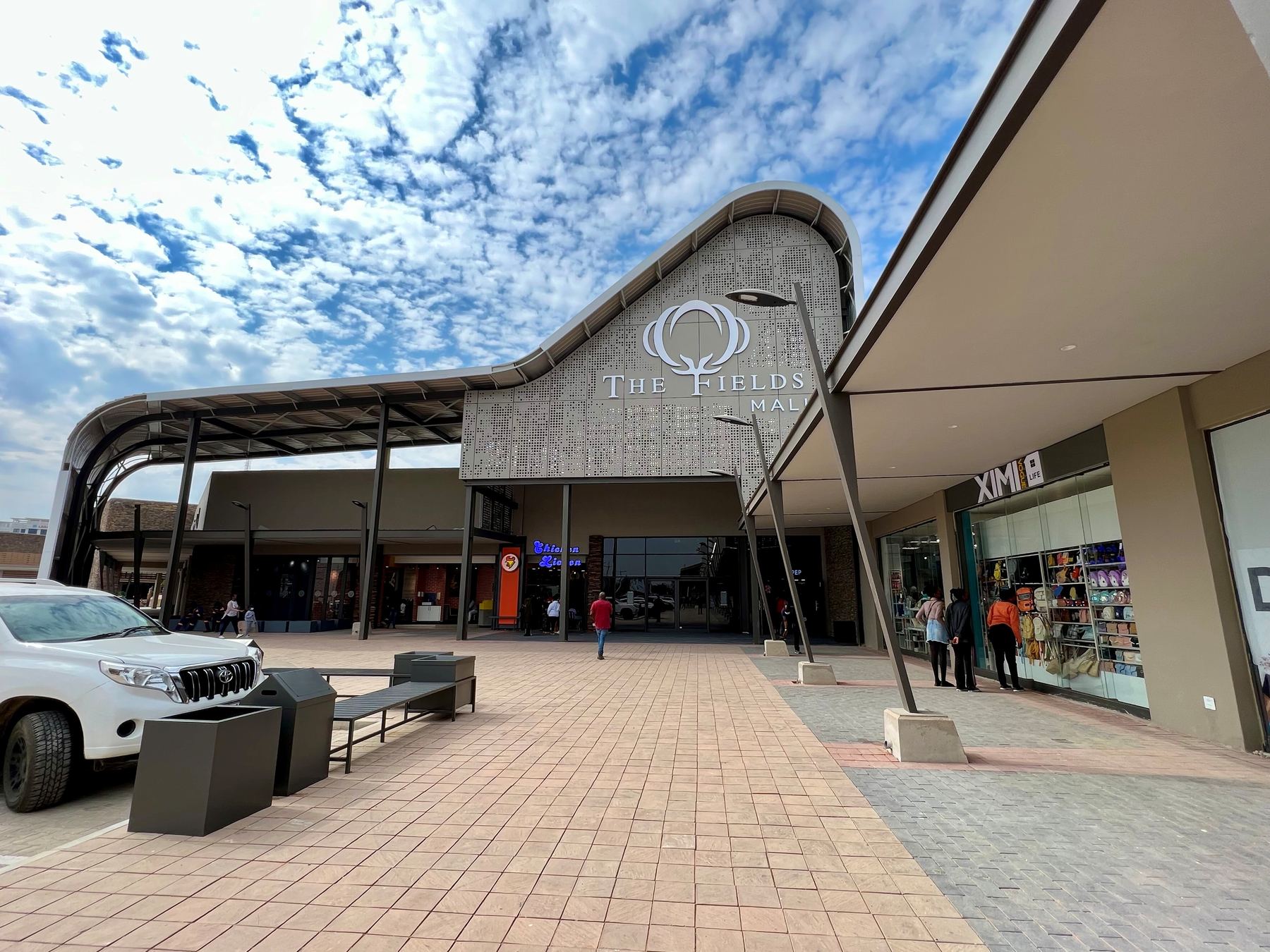
The Fields Mall, the New CBD's 26,000m² enclosed regional centre, is entering its third year of trade and showing encouraging signs of maturation. Select tenants are reporting year-on-year turnover growth of between 15% and 30%, reflecting the centre's improving foot traffic and the gradual consolidation of its tenant mix. While the centre continues to bed down, the trajectory is positive and its performance is increasingly validating the New CBD as a credible retail destination in its own right rather than purely a commercial and office node.
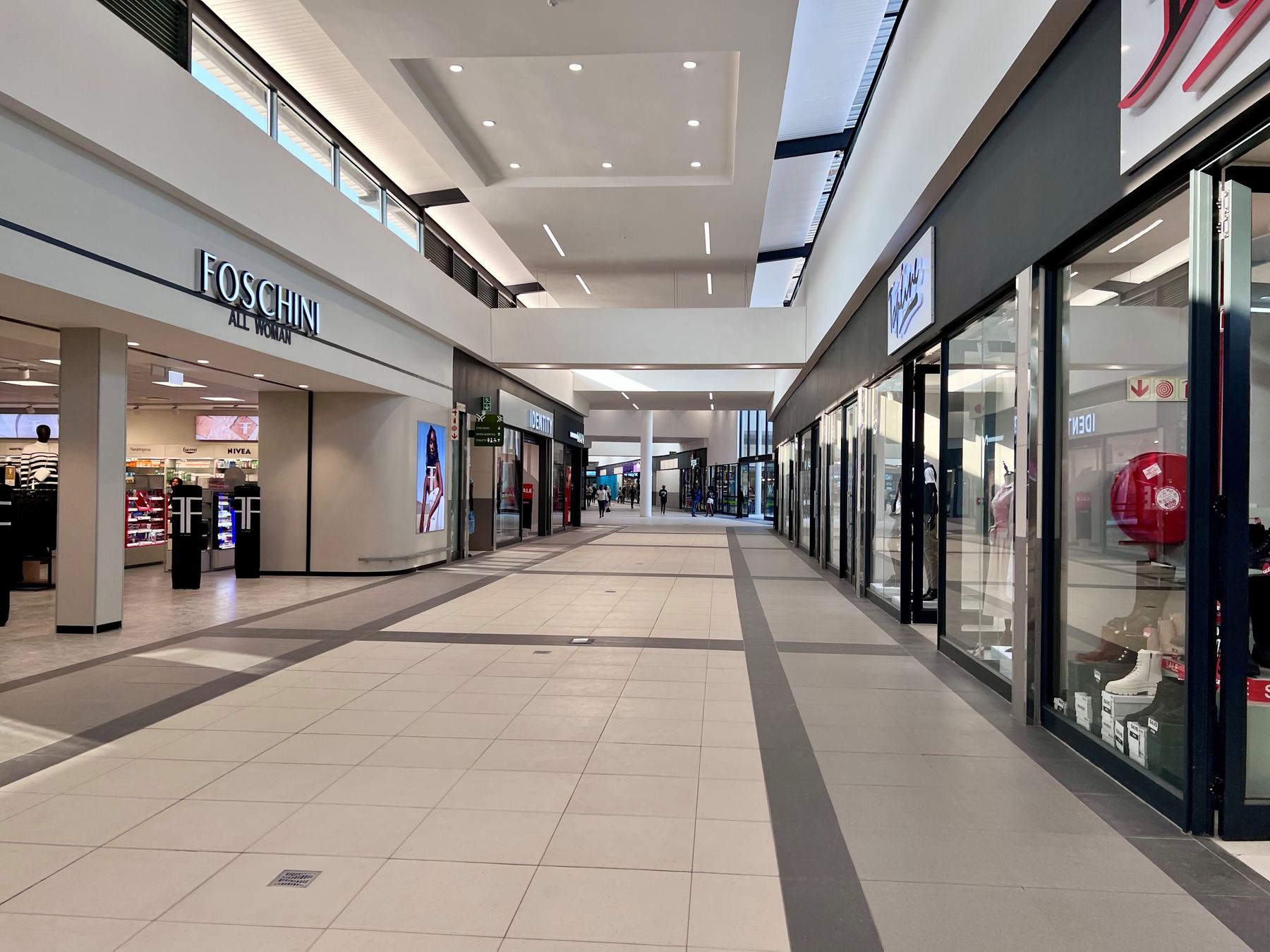
The Fields Mall · New CBD, Gaborone
The secondary retail segment faces meaningful and, in some cases, acute headwinds. Older convenience centres that have not been refurbished or repositioned are experiencing sustained rental pressure and elevated vacancy as tenants migrate towards newer, better-located offerings. Effective rental rates across secondary and convenience retail have in many instances regressed to levels last seen five or more years ago, a trend driven not only by tepid demand but by the increased negotiating leverage tenants are exercising in a market where alternative options have multiplied. Tenant incentive requirements have risen sharply, with landlords increasingly compelled to offer rental-free periods, fitout contributions, and reduced base rentals to secure or retain occupiers. The divergence between prime and secondary stock is expected to widen in the short- to medium-term. Landlords who have deferred capital expenditure on their assets do so at considerable risk, and in the current environment the cost of inaction is compounding.
New development is not immune to these pressures. The A10 Mall, an 18,000m² development completed in Q4 2025, has struggled to attract tenants since opening, with vacancies estimated at approximately 70%. The centre faces a challenging competitive environment, with the nearby Hill View Mall (±7,000m²), opened in September 2025, and Turnrite Mall (±6,000m²), both well-located in close proximity with established tenant mixes, presenting a compelling combined offer that has proven difficult to dislodge. Prevailing macroeconomic conditions have compounded the challenge, limiting the pool of expanding retailers and constraining landlord incentive budgets. The A10 experience serves as a cautionary reminder that new GLA alone does not guarantee leasing success; location, competitive context, and tenant mix strategy are equally determinative.
A10 Mall · Gaborone
Hill View Mall · Gaborone
The rental pressure dynamic extends beyond purely secondary assets. The underlying driver is a consumer under genuine stress: rising living costs, constrained government expenditure, which has materially reduced the disposable income of a public sector workforce that anchors much of Botswana's formal retail demand, and the broader economic contraction of 2025 have combined to suppress retail sales volumes and compress retailer margins across virtually every trading category. National retailers navigating their own profitability pressures are pushing back hard on lease renewals and new lettings, leveraging a market where the pool of actively expanding operators has shrunk considerably. Even within the prime tier, line store rentals are under growing strain, and landlords who previously operated from a position of strength on renewals are finding that tenants are willing to vacate rather than accept terms that no longer make commercial sense. Super-prime anchors and dominant convenience formats are relatively insulated by their essential trading profiles; it is the discretionary and fashion-oriented line store segment where the pressure is most acute and where vacancy risk is most likely to crystallise over the next 12 to 24 months.
At Kgale, Flamingo Mall (±3,000m²) is currently under construction as the first retail phase of the Eco-City mixed-use precinct.
±400,000m²
Total Existing GLA Gaborone
±900,000m²
Total Formal Retail Nationwide
±93,000m²
National Pipeline GLA
Trading density data for the retail nodes covered in this section is available directly from Maru Group.
Setlhoa
The Setlhoa node continues its strong growth trajectory, consolidating its position as Gaborone's most dynamic emerging retail precinct. With 6,000m² currently under construction, comprising Walkway Mall (Time Projects), and a further ±25,000m² of proposed retail development in the pipeline including Sebele Lifestyle Centre (±15,000m², Time Projects) and schemes from additional undisclosed developers, the node is entering a new phase of retail densification that will materially expand its offering over the next two to three years. The confluence of large-format retail, lifestyle offerings, and commuter-oriented convenience anchors along the A1 corridor has created a compelling value proposition that continues to attract both institutional tenants and independent operators. Developers and tenants should note that the cumulative new supply will require careful positioning to avoid cannibalisation within the node. The node's development activity increasingly includes sectional title retail units alongside conventional rental stock, reflecting growing investor appetite for ownership of smaller commercial units within the precinct.
±93,000m²
Active Retail Development Pipeline · H1 2026
Identified schemes across Gaborone, Selebi-Phikwe and secondary nodes
Kopano MallGaborone20,000m²Under Construction
Sebele Lifestyle CentreSetlhoa · Time Projects±15,000m²Proposed
GLA estimates based on disclosed or reported figures. Pipeline is not exhaustive. Proposed schemes subject to change. Source: Maru Group; company announcements.
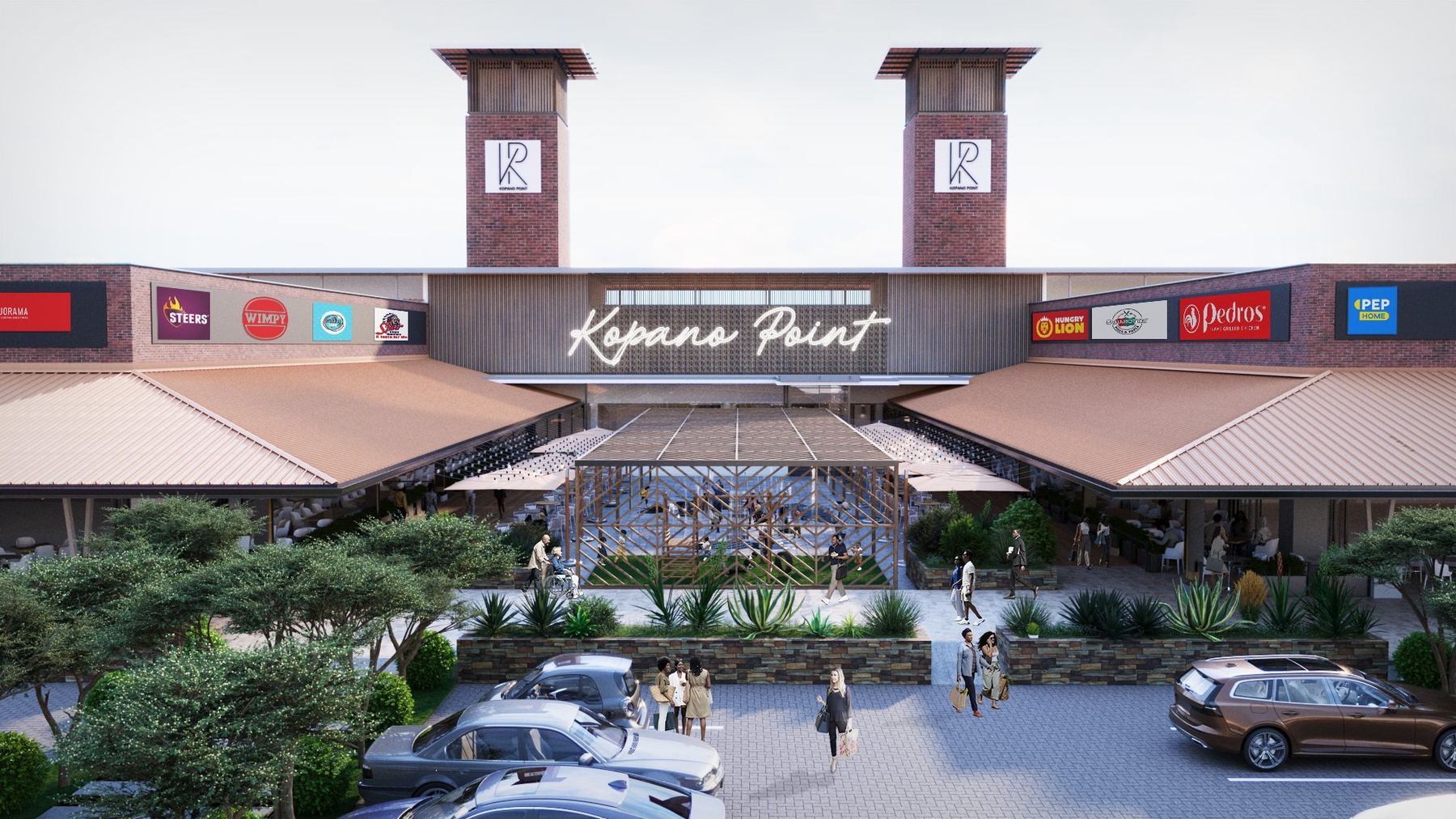
Mogoditshane represents the most significant near-term retail development opportunity within the Greater Gaborone catchment. With a population estimated at over 100,000 and a retail offering that remains overwhelmingly convenience-oriented, the node is absorbing its first major formal retail development, Kopano Point (±20,000m²), currently under construction and targeting an Easter 2027 opening. The centre is expected to serve as a catalyst for further investment in the node. We do not anticipate meaningful additional formal retail supply beyond Kopano Point in the near- to medium-term; however, the node's demographics and residential growth profile suggest latent demand for big box value retail offerings, a format that remains largely absent from the Greater Gaborone market and which could find a natural home in Mogoditshane as the node continues to densify.
Kopano Point (Under Construction) · Mogoditshane
Francistown
Francistown, Botswana's second-largest city with a population of approximately 150,000, is home to nine formal shopping centres offering a combined retail GLA of approximately ±85,082m². The market is anchored by Galo Mall (±30,000m²), with Blue Jacket Street serving as the established convenience and services corridor. Maru Group estimates a formal retail undersupply of ±76,570m² GLA in the catchment, a figure that points to meaningful medium-term development opportunity, subject to the prevailing cost of capital and the ability to secure anchor tenant commitments at viable rental levels. With 56% of households falling within the lower-income segment and a further 20% in the lower-middle segment, the Francistown market is best served by value-oriented retail formats with a strong grocery and everyday services anchor. The node benefits from a regional draw that extends into north-eastern Botswana and the cross-border trade corridor into Zimbabwe, providing a broader catchment than the resident population alone would suggest.
Toro Junction, comprising approximately 10,500m² of gross lettable area anchored by Pick n Pay, is located on the south-eastern edge of the Francistown catchment. While the anchor covenant is credible, the centre has experienced elevated vacancy attributable to its peripheral positioning relative to the node's established retail spine, illustrating that tenant covenant strength alone does not compensate for a locational disadvantage in a market where footfall is concentrated within a well-defined corridor.
Selebi-Phikwe
Zana Copperleaf Mall · Selebi-Phikwe
Selebi-Phikwe, Botswana's historic industrial heartland, has undergone a well-documented economic contraction following the closure of the BCL copper-nickel smelter in 2016, an event that fundamentally reset the town's retail demand fundamentals. Against this backdrop, Zana Copperleaf Mall plans to establish itself as the node's dominant formal retail offering, with the development of a 14,000m² offering alongside the already completed bus and taxi rank, expected to break ground in Q2 2026, set to consolidate that position and signal renewed developer confidence in the Phikwe catchment. The NexMetals Selebi-Phikwe project is targeting a 2028 production start, a milestone that, if achieved, carries the potential to materially re-energise the town's economy and underpin a new cycle of retail demand growth. A word of caution should be heeded, however: meaningful hurdles remain before production commences, and the retail demand uplift that would follow should be understood as a medium- to long-term dynamic contingent on project execution. Adding further long-term ambition to the Phikwe growth narrative, plans have been tabled for the development of the Mophane Cargo International Airport, a proposed international air cargo and passenger hub to be situated on a 1,200-hectare site near Selebi-Phikwe. The project, which includes an associated industrial and commercial hub, is conceived as a transformative logistics initiative for the SPEDU region and, if realised, would materially alter the node's economic and industrial property fundamentals. We note that the project remains at an early stage and the scale of the ambition will be tested by the realities of capital mobilisation, regulatory approvals, and execution. Nonetheless, its inclusion in the regional development conversation adds a further dimension to what is already an increasingly compelling medium- to long-term story for the Phikwe catchment.
Maun
Maun, the gateway to the Okavango Delta and Botswana's tourism capital, presents a retail market dynamic that is instructive of the challenges facing smaller urban centres. The arrival of Mall of Maun (±20,000m²) has materially altered the supply-demand balance in what is, at its core, a relatively small market of approximately 85,000 residents. The centre is showing genuine operational momentum, with select anchor tenants, notably in the grocery segment, performing strongly, though fashion and discretionary line stores continue to find trading conditions more challenging as consumer spend remains constrained. The more significant structural issue is one of retail cannibalisation. Several national retailers who already operated stores in Maun prior to Mall of Maun's opening have taken space in the new centre, effectively splitting their own trade across two locations rather than growing the overall market. In a catchment of this size, that dynamic is difficult to overcome in the short-term. Delta Palms Mall (±7,000m²) has struggled to retain occupancy in this environment, a dynamic that is perhaps unsurprising given that several of its tenants committed to Mall of Maun during its planning phase. The Maun experience serves as a broader market lesson: in smaller urban centres, new large-format retail supply does not create new demand, it redistributes existing demand, and the weakest existing assets absorb the vacancy.
Mall of Maun · Maun
Palapye
Palapye is the commercial capital of the Central District and one of Botswana's most strategically located secondary towns, positioned at the confluence of the A1 arterial linking Gaborone and Francistown to the north with the road serving Serowe to the west. This arterial intersection defines the town's retail geography. Palapye Junction (9,000m²) is the dominant retail asset in the town, benefiting directly from its position at this node and commanding the strongest footfall and trading densities of any centre in the town. Its locational advantage is structural and has proven durable through successive additions to the town's retail stock.
Palapye's formalised retail base has grown substantially, reaching approximately 65,000m² and serving a catchment that extends considerably beyond the immediate urban boundary. This supply growth has been heavily concentrated in a single development window: Square Mart (11,500m²), River View Mall (9,300m²), and Diphalane Mall (14,300m²) were all delivered within a broadly similar timeline, generating a period of acute supply-side pressure that tested the market's absorption capacity across all centres simultaneously. The resulting competitive dynamic has sharpened the differentiation between well-positioned and less well-positioned stock, and has required all landlords to work harder on tenant mix and rental positioning than was necessary when the town's retail offering was more limited.
Diphalane Mall has attracted the most significant institutional attention in the node. BPOPF's acquisition of Diphalane Mall via Khumo Asset Management in 2025 is a meaningful confirmation that institutional-grade retail in a well-configured secondary town catchment continues to attract serious pension fund capital, notwithstanding the broader market headwinds. Full transaction metrics will be reported once confirmed. Engen Mall (5,800m²), which is also institutionally held, rounds out the town's formal retail offer and continues to report strong trading densities, underpinned by its fuel retail anchor and convenience positioning, which provides a degree of insulation from the discretionary spending pressure affecting the broader retail market.
Mahalapye
Watershed Mall, owned by Letlole La Rona and comprising approximately 11,500m² of gross lettable area at a book value of P149 million, is the dominant retail asset in Mahalapye. Anchored by Shoprite and Choppies, the centre serves as the primary destination for the node's retail catchment and benefits from its position as the only formally anchored, institutionally held retail asset in the town.
Tsetseng Retail Group completed a CBD redevelopment of approximately 2,750m² in H1 2025, delivering a refreshed retail offering anchored by Spar with supporting specialty tenants including Studio 88, Debonairs, and Tops. The development reflects growing private sector confidence in Mahalapye's retail catchment and demonstrates that the node can support convenience retail investment beyond the dominant anchor mall format.
A notable mixed-use development is advancing in Mahalapye, with BR Properties, a subsidiary of Botswana Railways, entering a joint venture with Estate Construction to deliver a three-storey complex incorporating retail, a private clinic, and a filling station. The project is contingent on road infrastructure upgrades currently under review, with construction scheduled to commence approximately four months following access approval and an 18–24 month build programme thereafter. The development is expected to create around 200 construction-phase jobs and 250 permanent positions upon opening, and has attracted strong community support. Strategically positioned along the rail and A1 road corridor, Mahalapye's emerging mixed-use node reflects a broader trend of institutional and developer capital looking to secondary towns with established transport infrastructure and underserved catchments.
Letlhakane
Letlhakane is the principal urban centre of the Boteti sub-district and the primary commercial node serving the Orapa diamond mining corridor. The town’s formal retail market is anchored by Teemane Mall (11,500m²), developed by Time Projects and completed in 2022. The centre is positioned on the arterial main road through the town, at the periphery of the established commercial core rather than within it, a locational characteristic that has contributed to some vacancy that, while modest, is worth noting given the scale of the centre.
Teemane Mall · Letlhakane
The primary catchment, comprising Letlhakane town, recorded a population of 36,000 in the 2022 Statistics Botswana census. Orapa contributes an estimated secondary catchment of approximately 8,600 people, giving a combined market of approximately 44,600. Total formal retail offerings in the node now exceed 40,000m², a quantum that, relative to catchment depth, points to a market where supply and demand dynamics are already carefully balanced and where additional supply requires a clearly differentiated positioning strategy to be viable.
The Letlhakane Town Council has issued an expression of interest for the redevelopment of the town’s bus bank, a site that occupies a genuinely compelling position within the commercial core. While the locational characteristics of the site make it an inherently attractive development opportunity, the introduction of a meaningful retail component into a market already exhibiting supply pressure would represent a significant cannibalization concern for Teemane Mall and the broader retail base. Any credible feasibility assessment of the bus bank opportunity would need to address that risk directly and identify a sufficiently differentiated tenant mix and format to justify adding new supply into an already tested market.
04
Asset Class
The Botswana Office Market
Office Market Overview
Rental Snapshot · Office · Gaborone
Grade
Rental Range (per m²/month)
Forecast
Super-Prime
P145 – P165
→
Prime
P125 – P145
→
Secondary
P70 – P100
↓
Source: Maru Group Internal Data
Sales & Yield Snapshot · Office · Gaborone
Grade
Sales (per m²)
Forecast
Yield
Forecast
Super-Prime
P22,000 – P27,000
→
8%
→
Prime
P17,000 – P22,000
↓
8.5 – 9.5%
↓
Secondary
P8,000 – P12,000
↓
10 – 12%
↓
Source: Maru Group Internal Data
Demand for premium and Grade A office space is the clearest structural positive in the Gaborone office market. The New CBD is the primary destination for this demand, with institutional and corporate occupiers actively pursuing modern, high specification premises and showing a continued shift toward quality and sustainability certified product. The migration toward newer stock is evident in active leasing of new and recently completed space, and the pipeline being delivered by The District and Prime Plaza II is arriving into a market with genuine institutional demand depth. Setlhoa Village is also registering active Grade A demand, underpinned by its proximity to Airport Junction and the availability of quality product at competitive rentals.
Supply continues to outstrip demand across the secondary office segment in Gaborone, with older stock in peripheral nodes experiencing elevated vacancies and sustained rental pressure. The New CBD, Fairgrounds, and Setlhoa Village remain the primary destinations for institutional demand, though it should be noted that while Fairgrounds rentals are under pressure, the node retains a strong financial services identity that creates genuine occupier inertia; tenants whose peers and clients are concentrated in Fairgrounds often find it difficult to justify relocation to the New CBD on purely economic grounds. Landlords in peripheral and secondary nodes who have deferred repositioning capex face a narrowing window to act.
Fairgrounds continues to perform steadily, offering occupiers a credible alternative to the New CBD at rentals that remain approximately 20 to 25% lower for comparable grade space. Sectional title demand in Fairgrounds has been resilient, with owner-occupier appetite, particularly among SMMEs, proving durable despite broader market softness. Secondary nodes such as Main Mall and International Finance Park continue to experience rental stagnation, with asking rates having effectively bottomed out; we do not expect meaningful movement in either direction in the short- to medium-term.
The Setlhoa Village office node is maturing rapidly and has established itself as a credible third pillar of the Gaborone office market. Its proximity to Airport Junction, lower congestion relative to the New CBD, and the availability of modern, well-serviced product at competitive rentals bode well for continued leasing momentum in the near-term. A development pipeline of approximately ±20,000m² of new office GLA is set to come online in the node in the short- to medium-term, which will test the market's ability to absorb new supply at prevailing rental levels, though the quality of the incoming product and the node's continued residential and commercial densification provide reasonable grounds for optimism. The node is also seeing growing interest in sectional title office product, with units being brought to market alongside conventional rental stock. Further sectional title office pipeline projects and rental stock are expected to come to market in the short to medium term, which will deepen the node's offer and test the market's capacity to absorb new supply at prevailing rental levels.
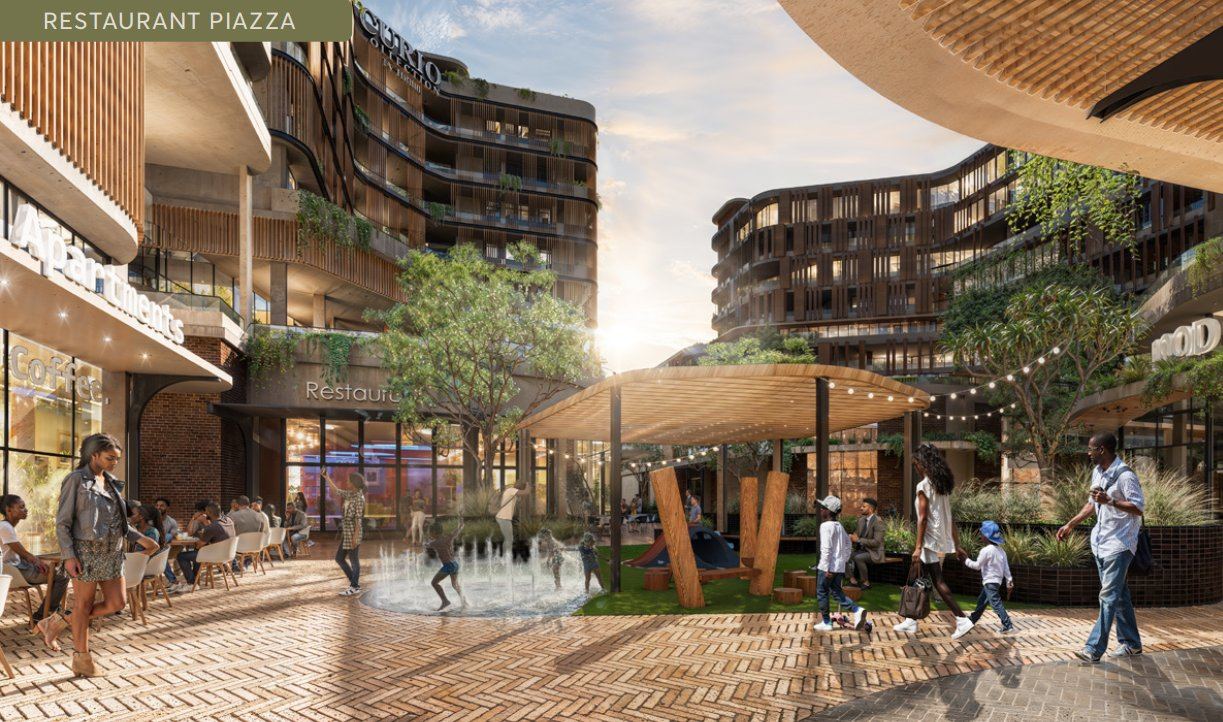
The New CBD pipeline is anchored by The District, a landmark mixed-use development that will deliver substantial new premium office GLA to the node and, when complete, is expected to reset the benchmark for super-prime office product in Gaborone. The development's retail and hospitality components, including a 148-key Curio Collection by Hilton Hotel, further reinforce the New CBD's position as the city's premier mixed-use business destination.
Prime Plaza II represents a further notable addition to the New CBD office pipeline. Developed by PrimeTime Property Holdings and delivered by Time Projects, the scheme extends the existing Prime Plaza precinct on PG Matante Drive and will ultimately comprise four commercial buildings with a combined GLA of approximately 13,500m². The first phase, the Motswere building, comprising 2,780m² of A-grade office space, is notable for having achieved the first 5-Star Green Star Office Design certification in Botswana, awarded under the Green Star SA v1.1 tool and recognised by the World Green Building Council. The building's sustainable design credentials include a 132kWp photovoltaic system with an estimated annual production of 234MWh, passive daylight design principles, low-flush sanitaryware, treated wastewater irrigation, and energy performance comparable to a Level 1 Net Zero Carbon rating under the GBCSA framework. On practical completion, the building will target a 5-Star As-Built rating, confirming that the delivered asset performs in accordance with its certified design intent. The development is targeted for completion in July 2027 and, when delivered, will raise the quality benchmark for green-rated office space in the New CBD at a moment when flight to quality and operating cost efficiency are the primary drivers of occupier decision-making.
RDC Properties recently completed a double-storey commercial development at the intersection of Nakedi and Lejara Roads in Broadhurst Industrial, Gaborone, comprising retail units on the ground floor with office accommodation above. The building is experiencing high vacancies following practical completion, a reflection of the challenging conditions facing secondary commercial product in a node where occupier demand has been subdued.
05
Asset Class
The Botswana Industrial Market
Industrial Market Overview
Rentals & Yield Snapshot · Industrial · Gaborone
Grade
Rental (per m²/month)
Forecast
Yield
Forecast
Super-Prime
P65 – P70
→
8%
→
Prime
P55 – P65
→
9 – 10%
→
Secondary
P35 – P50
↓
10 – 12%
↓
Source: Maru Group Internal Data — Note: Industrial nominal rates flat since 2021, implying real rental decline of ~20% given cumulative inflation.
The industrial sector presents a study in contrasts. Vacancy rates across prime nodes are negligible, institutional demand from logistics and distribution users remains robust, and quality stock is effectively fully let, all the hallmarks of a market in rude health. Yet beneath this surface resilience lies a structural tension that will define the sector's trajectory: nominal rental rates have been flat since 2021, implying a real rental decline of approximately 20% against cumulative inflation, while construction costs have continued to escalate, with industrial build costs now ranging from P8,000 to P12,000/m² inclusive of land. This widening disconnect between achievable rentals and the cost of delivering new product is materially constraining the pipeline and raises a fundamental question for developers: on what basis does new greenfield industrial development pencil in the current environment?
Industrial Development Feasibility · Gross Yield by Build Cost & Rental Level
Gross yield = (monthly rental × 12) ÷ total build cost inclusive of land. Build cost range P8,000–P12,000/m² reflects Gaborone prime nodes. Hurdle rate approximately 9% based on long-term bond yields above 13% and prime rate 7.19%. Source: Maru Group.
We believe the answer lies in a shift in development thinking. The Botswana industrial market has historically been built around conventional warehouse formats, with relatively low eaves, standardised bays, and generic specifications. This approach is increasingly difficult to justify at current build costs and flat rental levels. Developers who rationalise space around the specific operational requirements of target tenants, maximising cubic capacity through higher eaves, improving yard geometry, and reducing redundant GLA, are better positioned to achieve premium rentals that justify the cost of delivery. The near-total absence of 12m–15m eaves-height facilities of the kind that are standard across South Africa's prime logistics nodes represents both a gap and an opportunity: occupiers who require this specification currently have largely no domestic option and are effectively underserved by the market.
Demand for new large-format industrial facilities exceeding 10,000m² of gross lettable area remains notably muted across the Gaborone market, notwithstanding the existence of established large-format stock exceeding 20,000m² within the city's prime industrial nodes. Occupiers are deferring expansion and consolidation decisions against a backdrop of suppressed domestic demand, constrained capital, and an operating environment that does not currently support the volume commitments that large-scale new leasing typically requires. The 14,000m² facility developed and let by FaR Properties in Gabane on a speculative basis stands as a notable exception, demonstrating that well-specified product delivered by an operator with the balance sheet depth to execute speculatively can achieve full occupancy even in a secondary node. Demand across the 1,000m² to 5,000m² size range, by contrast, remains active across primary nodes including Block 3 and Commerce Park, where enquiry levels and take-up reflect the continued reliance on conventional smaller-format industrial stock.
Sebele and Setlhoa Village have emerged as Gaborone's most dynamic industrial growth nodes. New-build, modern-specification facilities in Setlhoa are achieving super-prime rentals of P65–P70/m², though rates at the upper end are typically confined to smaller units; larger big-box facilities are generally concluding leases closer to P65/m². The A1 corridor exposure, proximity to major retail anchors, and relatively uncongested road access continue to attract multinational logistics and distribution users. The recent completion of Barloworld Equipment's state-of-the-art Caterpillar dealership facility, an estimated 4,200m² premium-grade development completed in 2024, is a tangible demonstration of multinational appetite for best-in-class industrial space when the right product is made available. Phakalane remains in strong demand but faces well-documented congestion and infrastructure constraints that, if unresolved, risk tempering the node's growth trajectory in the medium-term. Established nodes including GICP, Gaborone West, and Block 3 continue to perform steadily, with activity predominantly driven by within-market moves rather than new entrants. GICP retains its position as the premier industrial node nationally. The node is also seeing demand for smaller rental units catering to a range of uses including light industrial, trade counter, and retail showroom activity, reflecting the node's growing commercial diversity and its appeal to occupiers beyond the conventional logistics and distribution segment.
The secondary node of Gabane is emerging as a noteworthy addition to Gaborone's industrial geography. FaR Properties recently delivered approximately 14,000m² of new industrial GLA to the node on a speculative basis, with the space fully let upon completion of the project. A substantial development pipeline is anticipated to follow in the medium-term. While Gabane occupies a secondary position relative to the established Gaborone nodes, its expanding supply base and improving accessibility suggest it will increasingly attract occupiers priced out of, or unable to secure space in, the prime corridor.
Beyond Gaborone's primary catchment, two distinct demand signals are emerging. In the Kalahari Copper Belt to the west, the Khoemacau copper expansion is generating growing demand for logistics and light industrial property in support of mining operations and related supply chains, a structural rather than cyclical dynamic that creates genuine medium-term opportunity for developers and investors willing to look beyond the capital. To the east, the NexMetals Selebi-Phikwe project is driving renewed interest in the Phikwe industrial node, a market that has been largely dormant since the closure of the BCL smelter. These are geographically and economically distinct demand drivers, but both point in the same direction: the Botswana industrial opportunity is increasingly a national story, not a Gaborone one.
Maru Group notes an emerging demand signal for large-format industrial facilities in secondary towns, most notably Francistown. The city sits at the confluence of Botswana's primary trade corridor, carrying significant freight volumes in both directions: northward from South Africa toward Zambia, Tanzania, and frequently through Zimbabwe, and southward from the port of Dar es Salaam and the copper mining regions of northern Zambia. This bidirectional freight dynamic creates a structural case for large-scale logistics and warehousing investment that is distinct from the domestic demand dynamics constraining the Gaborone market. Operators serving these regional trade flows require facilities of a scale and specification that the current Francistown industrial stock does not yet provide, and this gap represents a credible medium-term development opportunity for investors with the appetite and capability to deliver to that specification.
06
Asset Class
Mixed-Use Developments
Mixed-Use Developments
Gaborone is entering a new phase of large-scale mixed-use development that, over the next decade and beyond, has the potential to materially reshape the city's commercial and residential landscape. Several landmark schemes are either under construction, in advanced planning, or in early-stage development, each of sufficient scale to function as a self-contained urban precinct rather than a conventional single-asset development. While the short- to medium-term delivery of these projects will be tempered by the structural headwinds facing the Botswana property market, most notably the impact of elevated mortgage rates on residential demand and the cost of capital constraints facing developers, their long-term significance to Gaborone's urban form should not be underestimated.
The District, New CBD
The most advanced of Gaborone's mixed-use schemes, The District is a landmark development in the New CBD comprising retail, premium office space, and a 148-key Curio Collection by Hilton Hotel. The project represents the most significant addition to the New CBD's commercial stock in recent years and, when complete, is expected to reset the benchmark for super-prime office and retail product in the node. The hotel component addresses a longstanding gap in Gaborone's upper-midscale accommodation offering and will strengthen the New CBD's position as the city's premier business destination.
Eco-City, Kgale / Mokolodi Corridor
The most ambitious mixed-use vision currently in the Gaborone market is the Eco-City precinct being developed by RIC, situated adjacent to Commerce Park and extending toward Mokolodi. The scheme is conceived as a fully integrated urban precinct, with a programme that includes over 3,000 residential units, medical suites, a hotel, and a 15,000m² lifestyle retail centre to be known as Kgale City Lifestyle Centre. The precinct's retail ambitions are anchored by Flamingo Mall, a ±3,000m² convenience centre currently under construction and the first phase of what is envisaged as a substantially larger retail offering over time. It should be noted, however, that the broader Eco-City vision carries a long development horizon and meaningful execution risk. The residential component in particular will be sensitive to prevailing mortgage rates and the depth of the owner-occupier market; in the current environment, with lending rates elevated and household affordability under pressure, the pace of residential absorption will be a critical variable in determining whether the full precinct programme can be delivered to the originally envisaged timeline. The Kgale City Lifestyle Centre remains at planning stage and its delivery is contingent on meaningful residential densification of the precinct first. We believe the concept is sound, the locational fundamentals and catchment demographics are compelling, but a word of caution should be heeded by investors and tenants alike: execution will be measured in years, not months.
BDC Block 5, Gaborone
Perhaps the most consequential long-term development opportunity in Gaborone's pipeline is the Botswana Development Corporation's 77-hectare Block 5 site. The scale of the site places it in a category of its own, large enough to accommodate a genuinely mixed-use urban quarter spanning multi-residential, commercial, retail, medical, and educational uses. Development activity is anticipated to commence within the next few years, though the full build-out of a site of this magnitude should be understood as a generational undertaking, a 15 to 20 year horizon at minimum. The scheme's ultimate impact on Gaborone's urban fabric will depend heavily on the quality of the masterplan, the sequencing of uses, and the ability to attract institutional capital at each phase of delivery. What is not in doubt is the site's strategic significance: at 77 hectares in an established Gaborone location, it represents one of the largest single development opportunities in Southern Africa's secondary city markets.
Maun East Smart City
Maun is also emerging as a mixed-use development destination in its own right. The Maun East Smart City, a 139-hectare smart, green mixed-use estate officially launched in the town, represents an ambitious vision for Maun's urban evolution, blending residential, commercial, cultural, and ecological uses within a single integrated precinct. The first phase will commence with 200 residential units, intended to activate cashflow and unlock the rollout of the broader mixed-use programme. As with all large-scale mixed-use schemes of this nature, execution will be measured over years rather than months, and the quality of the finished product will ultimately depend on the developer's ability to attract the capital, expertise, and tenant commitments that a project of this ambition requires. What is not in question is the underlying demand rationale: Maun's rapid urban expansion and improving economic profile demand a more sophisticated development response than the town's existing stock currently provides, and a well-executed smart city precinct would find a ready market.
07
Asset Class
The Botswana Hospitality Market
Hospitality Market Overview
Gaborone
Gaborone's hospitality market is characterised by a structural mismatch between supply and demand that has persisted for several years. The city's accommodation stock is dominated by upper-midscale and budget offerings, with no true luxury or five-star product currently in the market. Occupancy performance reflects this: budget corporate properties are achieving occupancies in the range of 20% to 40%, upper-midscale assets are performing at approximately 45% to 55%, and only a select number of upper-midscale properties offering near four-star quality and well-located within the primary business nodes are consistently achieving occupancies above 60%. The majority of the upper-midscale tier, however, is settling at 50% to 55%, reflecting the broader softness in corporate travel demand.
The most significant near-term addition to Gaborone's hospitality stock is the BDC-Radisson development at the Fairscape Precinct in Fairgrounds, a P700 million, 150-key five-star hotel operated under a 20-year management agreement with Radisson Hotel Group, scheduled to break ground in April 2026. The development addresses a long-standing gap in Gaborone's accommodation offering and is deliberately positioned to unlock the MICE segment, strengthening Botswana's ability to attract large-scale international conferences and events. At P700 million for 150 keys, the development economics are ambitious and success will depend heavily on the hotel's ability to stimulate new demand rather than redistribute existing corporate travel spend. The MICE thesis is credible as a long-term nation-building play, and explains government's willingness to deploy development capital into a segment that the private market has consistently declined to fund, but the broader market context of suppressed corporate travel and below-average occupancies across the existing stock raises real questions about the asset's near-term commercial viability without ongoing institutional support.
The New CBD has also seen a recent addition to its hospitality offering with Hotel 430, a 100-key property that further consolidates the node's position as Gaborone's primary business travel destination. Its arrival, alongside the forthcoming Curio Collection by Hilton at The District, signals a growing recognition that the New CBD's commercial density is sufficient to support a meaningful hospitality cluster.
Node Focus — Maun & The Okavango Delta
Maun & The Okavango Delta
The Okavango Delta · Botswana
Maun functions less as a conventional hospitality market and more as the primary gateway to one of the world's most sought-after wilderness destinations, the Okavango Delta. The town's hospitality offering spans a spectrum from budget transit accommodation serving overland travellers to the luxury lodge and tented camp experiences that define Botswana's global tourism brand. It is at the upper end of this spectrum where the market is performing most compellingly: luxury camps and lodges within the Delta are achieving occupancies approaching 100% during the high season, underpinned by robust international demand from high-net-worth travellers for whom Botswana's low-volume, high-value wilderness experience represents a near-irreplaceable destination. Low season occupancies soften, as is characteristic of the sector, but the overall demand trajectory for premium wilderness product remains strongly positive.
New supply at the luxury end is selective and intentional, as it should be in an ecosystem of this sensitivity. The recent opening of Grays Eden Sanctuary Boutique Hotel, a P45 million riverfront facility situated along the Thamalakane River in partnership with Ker & Downey Botswana, a subsidiary of Chobe Holdings, is a notable addition to Maun's town-based hospitality offering. The development, which attracted foreign direct investment from the United Kingdom and was facilitated through BITC, signals continued international investor confidence in Maun as a hospitality destination in its own right, beyond its gateway function.
Grays Eden Sanctuary Boutique Hotel · Maun
A further signal of Maun's maturing hospitality market is the development by Estate Construction of an intimate luxury apartment complex, approximately 12 to 14 units, targeting the long-stay hospitality segment. The product is designed to serve the diverse base of extended-stay occupiers that Maun's unique economy generates: safari operators, conservation and NGO sector workers, and corporate and expatriate residents who require a quality residential-hospitality hybrid that the town's existing stock does not adequately provide. The development is a small but meaningful indicator that investors are beginning to read Maun's demand profile with greater sophistication, recognising that the town's hospitality opportunity extends beyond the transit and gateway function and into a longer-stay, higher-yield accommodation segment.
A notable shift is also emerging on the capital side. Botswana's institutional investment community, historically anchored in listed equities and conventional commercial property, is beginning to direct capital toward the luxury tourism and conservation sector, driven in part by government's deliberate push for pension funds to broaden their investment mandates into an industry that contributes approximately 12% of GDP and which is increasingly viewed as a strategic counterweight to the country's diamond dependency. This is not a new dynamic for international and regional capital, which has long found a natural home in the Delta's luxury lodge sector, but the entry of domestic institutional money represents a meaningful evolution in the market's investor base. A tangible expression of this trend is the forthcoming Singita Elela Lodge, opening in 2026 on an exclusive 170,000-hectare concession in the Okavango Delta, a development that counts Botswana institutional capital among its investors and which, by any measure, represents the global pinnacle of conservation-led luxury hospitality. Singita's expansion into Botswana is a powerful endorsement of the Delta's enduring position as one of the world's premier wilderness destinations.
Node Focus — Kasane & The Chobe Corridor
Kasane & The Chobe Corridor
Kasane has established itself as one of Botswana's most compelling hospitality nodes, offering visitors access to the Chobe National Park and the Zambezi river system at a price point that is materially more accessible than the Okavango Delta's luxury lodge circuit. The town's proximity to Victoria Falls, one of the world's premier natural attractions, further enhances its appeal, with visitors increasingly using Kasane as either a base for day trips to the Falls or as a natural stop on a broader southern African touring circuit. This combination of Chobe's exceptional wildlife offering and convenient access to Victoria Falls creates a dual demand driver that few safari destinations in the region can match. The node's relative affordability compared to the Delta is its defining competitive advantage and one that continues to drive healthy occupancy levels across the hospitality spectrum, with both international visitors drawn by Chobe's exceptional wildlife density and the favourable exchange dynamics of a weak Pula, and domestic travellers for whom Kasane represents a premium but attainable bush experience.
The supply side is responding to this demand with meaningful new investment. Chobe Safari Lodge has recently completed a significant refurbishment of its rooms and common areas, meaningfully elevating the quality of its product and reinforcing its position as one of the node's anchor hospitality assets. More significantly, a major expansion project is currently under construction at one of Kasane's established hospitality properties, a development that will deliver approximately 200 keys and a 1,000-capacity conference facility, positioning the asset as the node's first serious MICE destination. Completion is anticipated in 2026, and while the scale of the ambition is notable, delivering a project of this complexity to the required specification in the Kasane market presents real execution challenges. We would not be surprised if the finished product reflects the constraints of the build environment, with rooms coming to market at accessible price points but potentially falling short of the premium specification that a MICE-oriented positioning demands. The development will nonetheless represent a meaningful addition to the node's supply and, at the right price point, will find a market.
A word of caution should be heeded, however. The Chobe corridor is beginning to show early signs of the tourist congestion that has challenged other high-volume safari destinations globally, with boat traffic on the Chobe River in particular becoming a notable pressure point. This dynamic does not yet represent a material constraint on demand, but it is a trend that park management and the hospitality sector will need to monitor carefully to protect the quality of the visitor experience that underpins the node's appeal. The Kazungula Bridge, which was expected to catalyse a new wave of regional tourist flows into the node, has yet to generate a measurable uplift in visitor numbers, and its tourism impact should be understood as a medium- to long-term dynamic rather than an immediate demand driver.
Cresta Marakanelo — Listed Hospitality Sector
Cresta Marakanelo, the only listed hospitality company on the Botswana Stock Exchange and the country's most significant institutional holder of business-focused hotel assets, provides the clearest window into the structural pressures facing Botswana's corporate travel market. The company recorded revenue of P365.2 million for the year ended 31 December 2025, a 5 percent decline on the prior year, driven by lower occupancy levels and softer average room rates across its business-focused portfolio, which accounts for 77 percent of total room inventory. The company recorded a loss before tax of P32.1 million for the year, a decline of 1,063 percent from the P3.0 million profit before tax in FY2024, attributed to the economic slowdown and a non-cash impairment loss on non-financial assets. The diamond market slowdown's knock-on effect on corporate travel demand was a material headwind, most acutely felt at Cresta Jwaneng, which recorded an impairment loss of P14.1 million following a reassessment of recoverable value in a tightening discount rate environment.
Gross profit margin compressed from 38 percent to 34 percent, reflecting the combined impact of lower revenue and higher depreciation charges. Shareholders' equity declined 15 percent to P139.3 million. The company ended the year with a positive cash position, no utilisation of its overdraft facility, and meaningfully reduced debt service obligations following a successful restructuring of its ABSA facilities, though the benefit of improved debt management has not yet translated into restored profitability. Subsequent to the year-end, the Cresta Botsalo Hotel lease was terminated early by mutual agreement on 31 May 2026, ahead of its contracted September expiry, in a move management has described as portfolio optimisation. Management has flagged market diversification, leisure segment growth, and digital distribution as the primary levers for recovery in 2026, credible priorities, but ones that will be tested by a macroeconomic environment that shows limited signs of near-term improvement in corporate travel demand. Cresta's results illustrate the depth of the challenge facing Botswana's business hospitality market: a sector navigating a cycle that has yet to find its floor, with recovery dependent on a corporate travel environment that the current conditions do not yet support.
Chobe Holdings
Chobe Holdings, the BSE-listed luxury lodge operator whose portfolio spans wildlife concessions across Botswana's premier conservation and tourism nodes, reported revenue of P714 million for FY2026, with profit before tax of P237 million and earnings growth of 24.39 percent on the prior year. The performance stands in direct contrast to the results of the corporate business travel segment. Chobe Holdings draws from an international high-net-worth visitor base whose appetite for Botswana's wilderness product has proved insensitive to the domestic macroeconomic cycle; Cresta's business hotel model is directly exposed to a contraction in corporate travel demand that that same cycle has generated. The divergence in financial outcomes between the two listed hospitality entities is the clearest available illustration of the segment bifurcation running through Botswana's hospitality market: luxury leisure and conservation hospitality is performing strongly, and business-oriented accommodation is under sustained pressure.
Luxury & Conservation International visitor demand
Revenue FY2026P714m
Profit Before TaxP237m
Earnings Growth+24.4%
Macro SensitivityLow — Insulated from domestic cycle
vs
Cresta Marakanelo
Business & Corporate Hotels Domestic corporate demand
Revenue FY2025P365m
Loss Before Tax(P32.1m)
PBT Change YoY-1,063%
Macro SensitivityHigh — Recovery floor not visible
Sources: Chobe Holdings FY2026 audited results; Cresta Marakanelo FY2025 audited results. Financial year-ends differ between the two entities.
National Overview
Botswana's hospitality market is best understood as three distinct but complementary demand stories operating in parallel. Gaborone anchors the business and corporate travel segment, a market navigating genuine cyclical headwinds but retaining structural depth, underpinned by the country's institutional and diplomatic economy and the long-term MICE ambitions now being given physical expression through the BDC-Radisson development. Maun and the Okavango Delta represent the country's most internationally recognised leisure asset, a low-volume, high-value wilderness experience that is effectively supply-constrained by design, commanding premium rates and near-full high season occupancies from a global audience for whom it remains a bucket-list destination. Kasane and the Chobe corridor occupy a compelling middle ground, offering world-class wildlife access and proximity to Victoria Falls at a price point that attracts both international and domestic visitors, with a supply pipeline beginning to respond meaningfully to that demand.
Across all three nodes, the common thread is a market bifurcating along segment lines, with assets offering a differentiated, well-maintained product performing strongly while those that do not are feeling the pressure of a more discerning traveller and a more competitive supply environment. Perhaps the most significant structural development, however, is the emergence of domestic institutional capital as a serious participant in the hospitality and conservation investment space, a shift that, over time, has the potential to unlock a new cycle of quality supply across Botswana's tourism nodes and to deepen the market's resilience against the commodity cycle volatility that continues to define the broader economy. For developers and investors, the hospitality opportunity in Botswana is real, but it increasingly rewards specificity of product, precision of positioning, and patience of capital.
Ratings reflect Maru Group qualitative assessment. Directional indicators only — not investment recommendations.
Botswana's commercial property market is navigating a more complex operating environment in H1 2026 than at any point in the past decade. GDP contraction in 2025, a sharp rise in the cost of capital, government fiscal stress, suppressed domestic demand, and the transmission of a global energy shock through fuel prices and consumer inflation have combined to raise the bar for new development and investment, and to accelerate the bifurcation between quality assets and secondary stock across all asset classes. With long-term bond yields now exceeding 13% and the MoPR raised to 5.5% in April 2026, stabilised development yields need to meaningfully exceed 9% to justify the risk premium, and developers and investors who cannot demonstrate that case will find capital increasingly difficult to source.
The retail sector's prime nodes remain structurally sound, underpinned by urbanisation at 70.9% and sustained demand from national and multinational retailers. However, rental pressure is a pervasive theme across the market, not confined to secondary stock but increasingly visible across the prime line store tier. A consumer under genuine stress, with rising living costs, reduced government expenditure, and compressed retailer margins, is translating directly into weaker sales volumes and a more combative leasing environment. Effective rentals across secondary and convenience retail have regressed materially, tenant incentive costs have risen, and the pool of actively expanding retailers has contracted. With ±900,000m² of formal retail nationwide and ±93,000m² in the current development pipeline, the market's ability to absorb new supply will depend critically on pre-let depth and the quality of anchor tenant commitments, with the experience of recently delivered centres demonstrating that new GLA without a credible competitive positioning strategy is a value-destructive proposition. The office sector continues to work through legacy oversupply in secondary nodes; flight to quality is entrenched, and the New CBD, Fairgrounds, and Setlhoa Village remain the primary destinations for institutional demand. Landlords in peripheral and secondary nodes who have deferred repositioning capex face a narrowing window to act.
The industrial sector presents the market's most nuanced picture. Prime vacancy is negligible and institutional demand is robust, yet flat nominal rentals since 2021 have produced a real rental decline of approximately 20%, while build costs continue to escalate. This disconnect is constraining new supply and demands a rethink of how industrial product is conceived and delivered. Developers who move beyond generic warehouse formats, rationalising space around tenant operational requirements and delivering higher-specification product including the large eaves-height facilities of 12m–15m that remain largely absent from the Botswana market, will be better positioned to achieve the rental levels that justify delivery. The opportunity is real; the execution bar has simply risen. Demand for large format industrial facilities exceeding 10,000m² remains muted in the Gaborone market against a backdrop of macroeconomic suppression. An emerging demand signal from Francistown and secondary logistics nodes, driven by bidirectional regional freight movements connecting southern and central Africa, points to a credible development opportunity in the coming years for investors prepared to look beyond the capital.
The medium-term outlook carries genuine upside. The Khoemacau copper expansion, the Kazungula Bridge, the Martins Drift corridor, and the Trans-Kalahari Railway are creating structural demand tailwinds that will outlast the current diamond cycle. Francistown's emergence as a regional logistics hub, the Kalahari Copper Belt's growing industrial footprint, and the continued densification of Gaborone's satellite nodes all point toward a market that is broadening geographically as well as deepening in sophistication.
Amidst the near-term noise, Botswana's long-term commercial property fundamentals remain intact and, we would argue, underappreciated. The country's urbanisation trajectory, institutional depth, political stability, and improving logistics connectivity continue to underpin a market that, at the quality end, has demonstrated remarkable resilience through a genuinely difficult cycle. Super-prime and prime assets in the dominant nodes have held their value, maintained occupancy, and continued to attract institutional capital; it is a market bifurcation, not a market collapse. And the structural story is getting stronger. Mineral diversification through copper and rare earth investment across the Kalahari Copper Belt and beyond, combined with transformative clean energy commitments including the 500MW Maun solar plant developed in partnership with Oman's NAQAA Energy LLC, are laying the foundations for a Botswana economy that is materially less dependent on diamond revenues than at any point in the country's modern history. The lesson of this cycle is not that Botswana commercial property is broken; it is that node selection, asset quality, and tenant mix have never mattered more. Investors and developers who apply that discipline will find that the fundamentals remain as compelling as they have ever been.
“
The bar for new development has risen materially, but so has the premium attached to quality. In a market where secondary stock is under sustained pressure and prime product is effectively fully let, the reward for getting it right has never been clearer.
MARU GROUP · H1 2026 BOTSWANA COMMERCIAL PROPERTY MARKET REVIEW
This report has been prepared by Maru Group for general information purposes only. Whilst Maru Group has endeavoured to ensure the accuracy of the information contained herein, no warranty is given as to the accuracy of the content. Re